Educate, Energize, Engage
Knox County celebrates Black history through education, remembrance, music, and community events.
Read Another Article


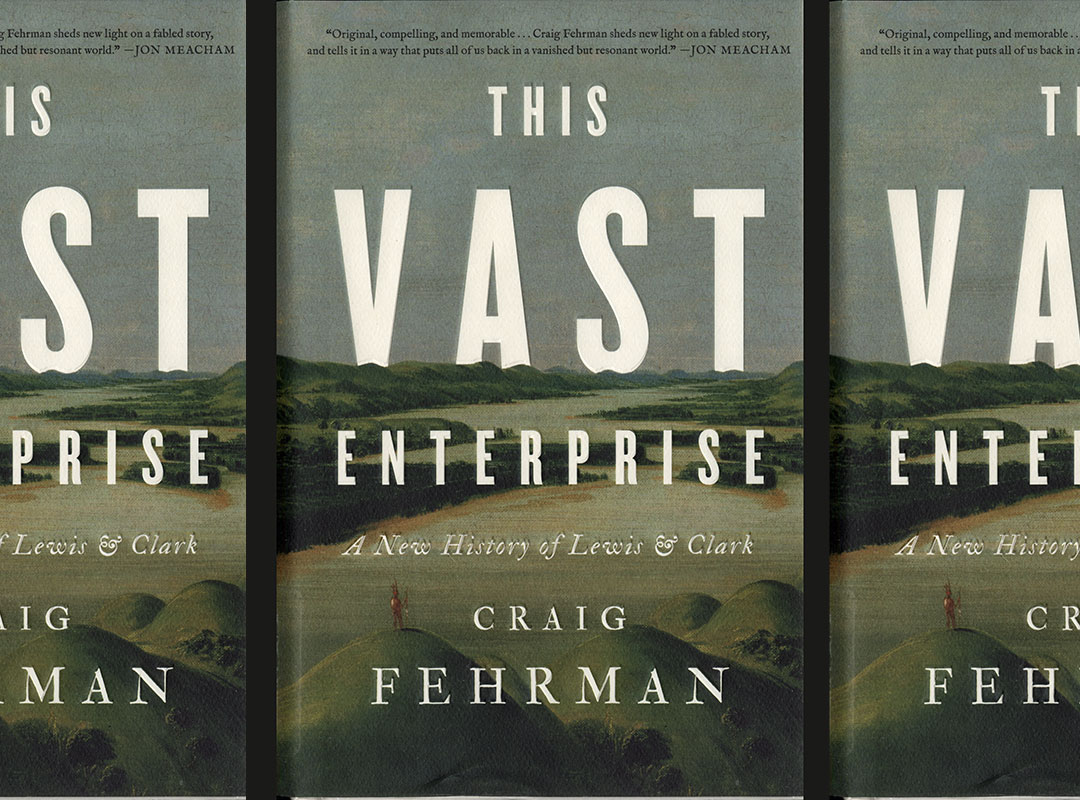


There have been countless books written about the 1804-06 expedition of Meriwether Lewis and William Clark’s Corps of Discovery, not to mention publication of the journals they kept. I recall reading and enjoying the late historian Stephen Ambrose’s highly praised book “Undaunted Courage: Meriwether Lewis, Thomas Jefferson, and the Opening of the American West” when it was released back in 1996.
No work that has previously been written about the expedition compares to the new best-selling book “This Vast Enterprise: A New History of Lewis & Clark” by Craig Fehrman. Fehrman takes a unique approach to telling the story, one that brings to light the major contributions of other key players, including some of the Native Americans the expedition encountered, by employing sources, such as oral histories and newly discovered documents. Many people were involved in the success of the enterprise, even though all the glory went to Lewis and Clark.
Part of what makes “This Vast Enterprise” unique is that alternating chapters are told from the perspective of either one of the individuals on the expedition or one of the Native Americans they met. Besides Lewis and Clark, these include Sacajawea (who everyone has heard of); York, William Clark’s slave; working-class sergeant John Ordway; Black Buffalo, who led a tribe of Lakota; Clatsop leader Coboway; Arikara leader Piahito; and Blackfoot teenager Wolf Calf. Some of these players receive more than one chapter. As the author writes regarding this cast of characters “When their lives come together—when their worlds collide on equal terms—it doesn’t just make for better history. It makes for a better story, too.”
This approach, fleshing out the key players, thus humanizing them, paints a more complete picture of the expedition, providing facts that even Lewis and Clark scholars likely didn’t know. Even while focusing on these specific individuals, the author keeps the story flowing.
A good example of his focus on other members of the expedition is the story of Clark’s slave York, who has never received this kind of coverage in a book. York was born into slavery under the Clark family in Virginia, then, moved to Kentucky when the family relocated there following the American Revolution. He worked as a slave on their Kentucky plantation, Mulberry Hill, where he received whippings, later becoming William Clark’s body servant. As a slave, he had no choice but to accompany Clark on the expedition, which meant leaving his wife, his aging father and stepmother, and his siblings behind.
On the expedition, York more than pulled his weight. He nursed Clark through sickness, carried a rifle and hunted, cooked meals, and undertook countless daunting tasks, such as paddling rapids. He even became something of an ambassador to the Native American tribes, who crowded around him, fascinated by the color of his skin. Even though York showed his worth, was accepted by members of the Corps, and began to see his place in the world differently, he still had to defer to his owner and was subject to his demands and criticisms.
York’s story had far from a happy ending. At the conclusion of the expedition, he asked for his freedom, but Clark refused, eventually hiring him out to men who treated him badly. Clark finally freed York circa 1820. He next drove a wagon and eventually died of cholera.
Journalist and historian Craig Fehrman was born and raised in southern Indiana, currently residing in Bloomington. A new historian, he has made a name for himself with his work. He is the author of one previous book, called “Author in Chief: The Untold Story of Our Presidents and the Books They Wrote.” “Author in Chief” was published in 2021, receiving stellar reviews.
Fehrman is one of those authors who spends years researching and writing his books. He spent ten years working on “Author in Chief” and devoted five years to “This Vast Enterprise.” For the latter book, he traveled to over thirty archives and did more than one-hundred interviews.
“This Vast Enterprise,” along with other books about Lewis and Clark’s expedition, are available at the Knox County Public Library, 502 North Seventh Street.

Knox County celebrates Black history through education, remembrance, music, and community events.
Vincennes cemeteries preserve history, honor lives, and provide peaceful community spaces.

The Library launches a new monthly sci-fi/speculative fiction book club starting in September.